
SACP Draws Economic Red Line: DA Coalitions Deemed Impossible
SACP General Secretary Solly Mapaila rules out future coalitions with the DA, citing fundamental economic differences. This stance impacts SA's political stabil
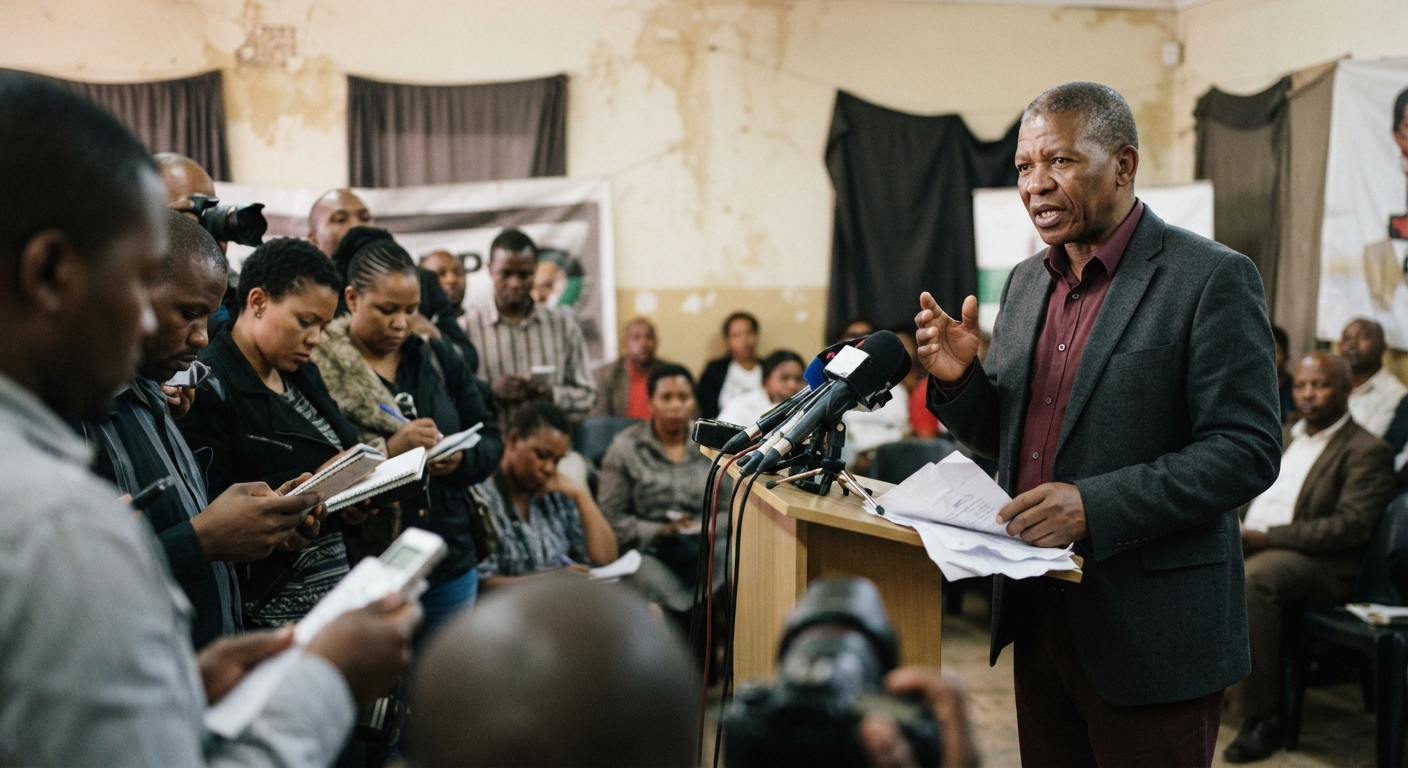
The South African Communist Party (SACP) has unequivocally slammed the door shut on any potential future coalition with the Democratic Alliance (DA), a move signalling deep ideological fissures that could profoundly shape the nation’s political and economic landscape. SACP General Secretary Solly Mapaila drew a stark line in the sand, dismissing the DA as diametrically opposed to the working-class interests the SACP champions, thereby complicating future governance models and policy predictability.
Ideological Chasm Deepens Coalition Hurdles
Speaking forcefully from the National Results Operations Centre, Mapaila detailed the SACP's resolute refusal, asserting, “We are a part of the working people,” and contrasting this with what he termed the DA's “opposite” agenda. The SACP leader highlighted a fundamental disagreement on economic philosophy, accusing the DA of promoting “more capitalism” and “more tenders” – a direct challenge to the SACP’s vision for equitable economic development. He also pointed to disparate political funding, noting the SACP's minimal capital contributions compared to the DA's reported R100 million-plus, framing this as evidence of differing loyalties and economic agendas.Mapaila further questioned the efficacy of DA governance in working-class communities, citing areas in Cape Town as examples where service delivery remains inadequate. His critique suggests a fundamental belief that the DA's economic model fails to address the socio-economic challenges faced by the majority.
Post-2024 GNU Fallout and Future Political Chess
Mapaila’s hardline stance is not new; it mirrors the SACP's vocal criticism of the current Government of National Unity (GNU) formed after the 2024 national elections, which includes the ANC and DA. The SACP views this alliance as a “betrayal of working-class interests,” underscoring their consistent ideological opposition. While the immediate focus of Mapaila's statement was on post-2026 Local Government Elections coalition prospects, the clear refusal to engage with the DA has broader implications. It indicates a significant hurdle for any future national or provincial government seeking broader consensus, particularly if the ANC's electoral support continues to decline, necessitating more diverse coalition partners. For businesses, this translates into potential policy uncertainty, as deeply divergent economic philosophies compete for influence in future administrations.The South Africa Angle
For investors and businesses operating on the Johannesburg Stock Exchange (JSE) or looking at South Africa, the SACP’s unambiguous rejection of the DA carries significant weight. Political stability and predictable policy environments are crucial for investment decisions and the health of the Rand. The SACP, as a long-standing ally of the ruling ANC, even if a distinct entity, still influences the broader political discourse and potential policy shifts. Their anti-capitalist rhetoric and critique of the DA's economic approach could signal a tougher regulatory environment or a push for more interventionist policies should their influence grow within future coalitions. This stance raises questions about the direction of macroeconomic policy, infrastructure development, and service delivery – all critical factors for business operations. A fragmented political landscape, where major parties rule out collaboration based on fundamental economic disagreements, inherently introduces an element of risk and uncertainty into the market.The SACP's declaration solidifies a significant ideological barrier in South African politics, guaranteeing that future coalition negotiations will be complex, with fundamental economic philosophies at the heart of the divide.
Source: IOL Business